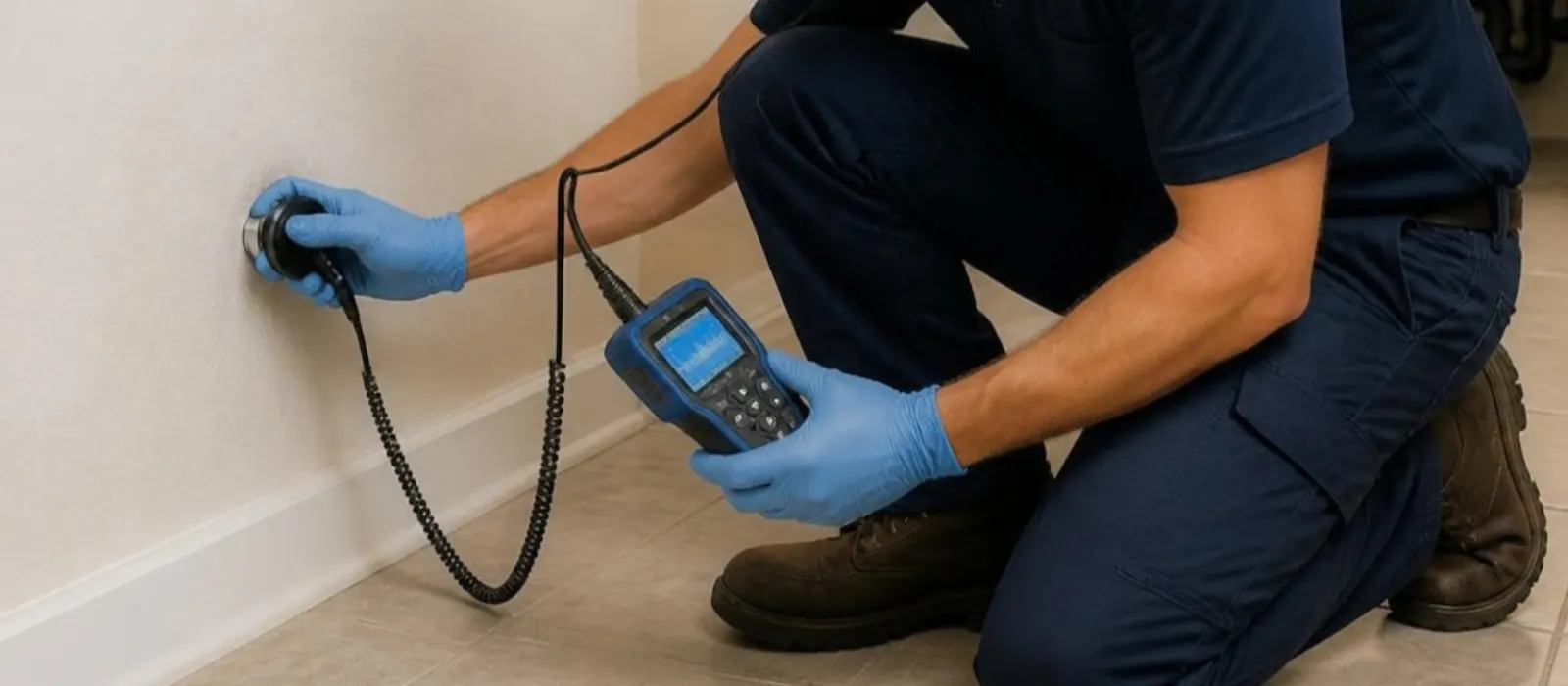
A plain definition
Leak detection is the process of finding where water is escaping from a pipe, a fixture or a drain when the leak is not visible. The goal is to locate the leak precisely, so the repair can be small. Without it, a plumber may open large sections of wall or floor in search of a leak, which costs more and makes more mess.
It is useful when your water bill rises with no change in use, when you hear water running that no one is using or when a stain appears on a ceiling, wall or floor. If water is actively flowing, close the main and see burst pipe repair. If the leak is quiet and hidden, leak detection is the right start.
How leak detection works
A technician uses several methods, often in combination.
| Method | What it does | Best for. |
|---|---|---|
| Meter test | Shuts off all water use and watches the meter for movement | Confirming that a leak exists. |
| Pressure test | Isolates sections of pipe and checks whether pressure holds | Narrowing a leak to a zone. |
| Acoustic listening | Uses sensitive microphones to hear water escaping | Pinpointing leaks in pressurized pipe. |
| Thermal imaging | Shows temperature differences from moisture | Walls, ceilings and radiant heat lines. |
| Camera inspection | Looks inside drain and sewer lines | Drain leaks and breaks. |
| Tracer gas | Fills a pipe with a harmless gas and detects where it escapes | Hard to find leaks. |
Signs of a hidden leak
The signs are often small and easy to ignore. A water bill that climbs without explanation is the most common. Others include a damp spot on a wall or floor, a musty smell, warm spots on a slab floor, peeling paint, new stains and the sound of running water at night.
Check your meter yourself. Turn off every fixture and appliance, then watch the small leak indicator on the meter. If it moves, water is going somewhere. If the leak indicator is not moving but you see damage, the leak may be in a drain or from the outside.
Leaks you can find yourself
Start with the toilets. A running or leaking flapper can lose gallons a day. Add a few drops of food coloring to the tank, wait fifteen minutes without flushing and check the bowl. If the color appears, the flapper leaks. Check under sinks, around the water heater and at the washer hoses.
Look at the hose bibs and irrigation lines. A split in a frozen outdoor spigot can leak inside the wall. See faucet and fixture repair for fixture leaks.
Slab leaks and leaks under floors
A leak in a pipe under a slab is hard to see. The signs are a warm patch of floor, a hissing sound or a bill that rises quickly. Acoustic tools can often pinpoint the spot from above. After that, the repair may mean breaking a small hole in the slab, or rerouting the line through walls or the ceiling to avoid it.
Many Hudson homes have basements with a slab and pipes in the joists above, which makes leaks easier to reach than in slab-on-grade houses. We tell you the likely approach before we cut.
Water, the Town and your meter
The Town of Hudson Department of Public Works also deals with a related problem in its sewer system, which is inflow and infiltration. That is groundwater and stormwater leaking into old pipes, and according to the DPW the Town investigates it. It is the same idea as a hidden leak on a larger scale, and it shows why the Town cares about where water ends up.
For you, the useful step is to find out how your water use is billed and read your meter. Contact the DPW at 978-562-9333 for questions about the meter and billing. If your meter shows flow with everything off, the leak is on your side of the meter and a plumber can find it.
What a leak detection visit looks like
We ask about the symptom, check the meter and walk the house. Then we use the tools that fit the case. We mark the leak location and explain the repair options. A small repair is often the same day. If it needs opening a wall, we schedule the work and plan the patch.
You see the price before any cutting. If you have a claim open with your insurer, ask them what documentation they need. Photos of the leak location and the tool readings can help.
Leaks in drains and sewer lines
Not every leak is on the pressurized supply side. A drain pipe can leak into a wall or under a slab, and a sewer lateral can leak into the soil. The signs are a smell, a damp spot with no supply leak and in the yard, a greener patch of lawn. A camera and a water test find these.
Drain leaks are less visible than supply leaks because they only leak when water runs. We run water through the line while we look, so a leak that only appears under flow is caught.
Radiant heat and water heater lines
Homes with hydronic heat or radiant floors can have leaks in the heat lines. The symptoms are a falling boiler pressure, a damp floor or a heating system that needs frequent refilling. Thermal imaging works well here because the water is warm.
A leak at the water heater is easier to see, but a slow one can rust the tank and the pan. Check the area around the heater every few months. If you see moisture, see water heater repair.
Why early detection saves money
A small leak that runs for months can saturate framing, insulation and flooring and lead to mold. Finding it early keeps the repair small. A leak that starts as a drip at a fitting is a minor job. The same leak behind a finished wall can become a major project.
What affects the cost
The cost depends on how many methods are needed, the size of the house, the access to pipes and whether the leak is on supply or drain. A simple meter test and a single acoustic pass costs less than a full thermal and camera survey.
We give a written price after we hear the symptoms. Homeowners in Sudbury and Marlborough book leak work with the same process. Insurance may cover some of the damage from a sudden leak, but usually not the repair of the pipe itself.
Leak detection questions
Acoustic microphones and thermal imaging show where water is escaping or where moisture has collected, without opening the wall first.
A rising bill, a moving meter with everything off, damp spots and the sound of running water are signs.
Often yes. Listening tools can pinpoint the spot from above.
The DPW at 978-562-9333 can answer meter and billing questions.
It depends on the policy. Damage from a sudden leak may be covered, and locating a hidden leak is sometimes part of the claim.
Many take an hour or two, longer for large houses or several methods.
Plumbing problem right now?
Call the 24/7 line. Dispatch tells you what to do first and sends a technician.