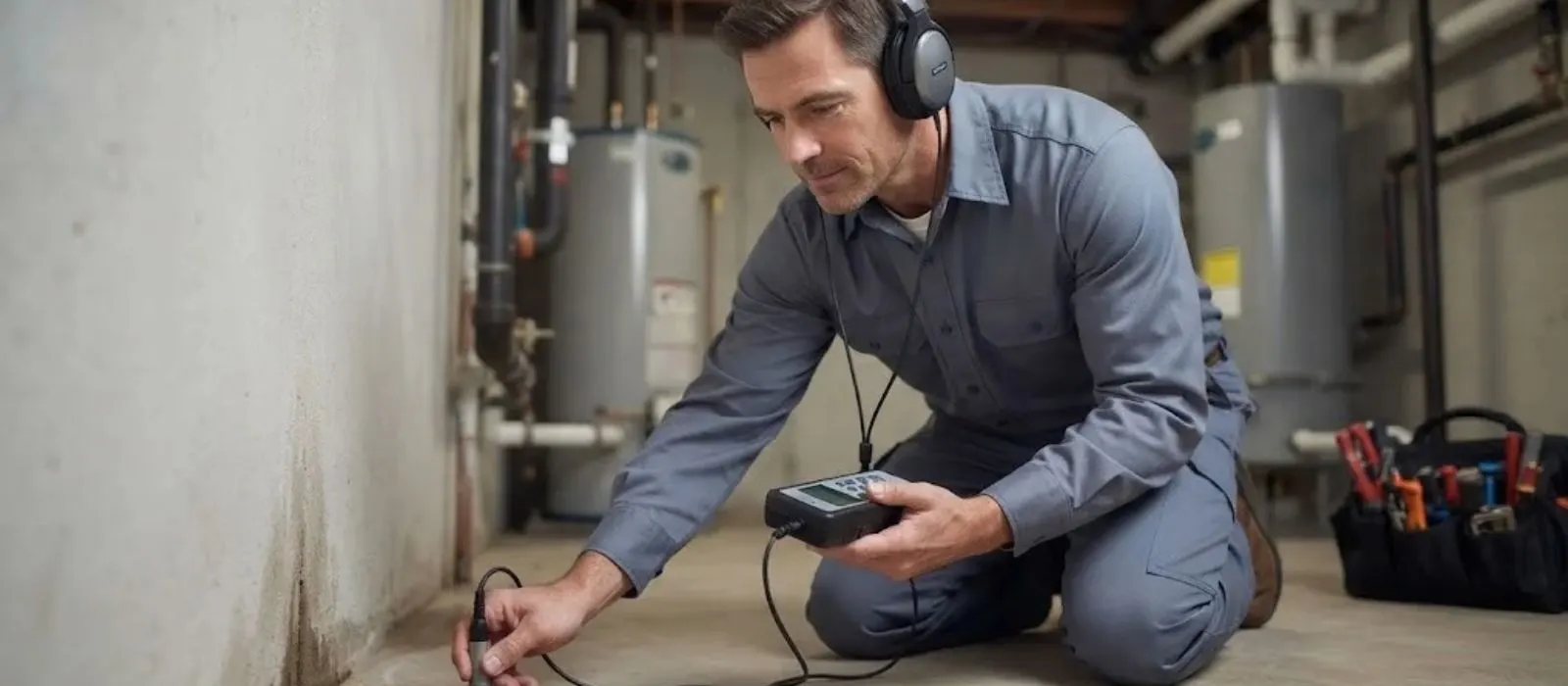
Active leak: stop the water first
Leak detection in Hudson, MA is a diagnostic job, so the first goal is to limit damage. If water is running through a ceiling or you hear it inside a wall, treat it as an emergency. Our dispatch line is staffed 24/7 and we offer same-day appointments when available.
- Close the main water shutoff, usually near the meter or where the pipe enters the basement.
- Open a low faucet to drain the lines, and switch off power to any wet room from the breaker.
- Put a bucket under drips and move valuables. Do not cut into a wet ceiling unless water is pooling.
- Photograph everything for your insurer before you clean up.
The meter is still running or the bill jumped
This is the most common way people find out. Shut off every tap, the ice maker and the washing machine, then watch the leak indicator on your water meter. If it keeps moving, water is leaking somewhere between the meter and a fixture.
Hudson's DPW Water Division reads meters three times a year for the water and sewer bills, so a hidden leak can run for months before a bill shows it. The Town is responsible for the public main, and you are responsible for the service pipe from the street to your house. A leak on your side of the street is yours to fix.
We separate the house from the service line by closing the main valve. If the meter stops, the leak is inside. If it keeps running, it is in the buried line, which we cover on the water service line repair page.
How we find a hidden leak
We use methods that locate the leak before anything is cut open. The method depends on where the water is.
| Tool | What it finds | Where it helps. |
|---|---|---|
| Acoustic listening | The hiss of pressurized water escaping | Slab floors, buried supply lines. |
| Thermal imaging | Temperature differences from wet insulation or a hot-water line | Walls, ceilings, radiant floors. |
| Moisture meter | Water content in drywall, wood and subfloor | Confirming how far damage has spread. |
| Pressure test | A pressure drop in an isolated line | Proving which pipe is losing water. |
| Tracer gas | Gas escaping from a pipe, detected at the surface | Buried lines under concrete or driveways. |
| Camera | Cracks and breaks inside drain lines | Drain leaks. See sewer inspection. |
Ceiling, wall and attic leaks
A brown ring on the ceiling is old water. A dripping one is new. We find the source above it, which is often a bathroom supply line, a tub drain or a roof leak that tracks down a stud.
Where possible we open a small access hole, not a whole wall. If the leak is from a roof or a window, we tell you so and you can call a roofer instead of paying for plumbing work you do not need.
Under the house, in the crawlspace and in the yard
Older Hudson homes with a basement or a crawlspace give us a view of the pipes. We look for wet insulation, mineral streaks and corroded joints. Copper pipe in older houses can develop pinholes, and galvanized steel corrodes from the inside.
Outside, a wet patch in the lawn that stays green in a dry week points to a buried line or a leaking irrigation zone. A drip at the curb stop box or the meter pit gets a quick check, since that fitting is a common leak point. Irrigation systems are also a leak source, and backflow devices on them are inspected under the Town's program.
If your property has a pool or spa with a suspected leak, tell dispatch. We handle the plumbing side, which is the lines and fittings, and not the pool shell.
When the leak is in a drain line
Not every leak is a supply line. A drain pipe that leaks only when a fixture drains can wet a ceiling for weeks. A camera and a dye test narrow it down fast. Leaks in drain lines often show up after a long clog, and the drain cleaning page explains how the two problems connect.
What affects the price of leak detection
We quote before work starts.
Insurers often cover sudden leak damage but not the cost of finding or fixing the pipe. A written leak report helps your claim. Want your real number? Call (508) 389-4045.
What the rules say about repairing a found leak
Finding a leak is diagnostic work. The repair that follows may be exempt from permitting if it is a faucet or valve leak, according to 248 CMR 3.05, but replacing a section of pipe generally needs a permit and an inspection.
A repaired supply line must meet the standard in the Massachusetts Uniform State Plumbing Code, 248 CMR 10.00. We tell you which category your repair falls into before we start.
Not sure where the water is going?
Call the 24/7 line and tell dispatch what you see. If the leak is already a split pipe, our burst pipe repair team can stop it the same day.
Common questions
Yes. Dispatch is staffed 24/7. An active leak through a ceiling or wall is treated as an emergency.
Turn everything off and check your water meter. If the leak indicator moves, water is escaping. A bill that rises with no change in habits is another sign.
Usually not at first. We use listening gear, thermal imaging and pressure tests to locate the leak, then open the smallest access point needed.
The Town maintains the main in the street. The service pipe from the street to the house is the homeowner's, and the Town says service work must be done by a contractor on its approved Water and Sewer Contractor list. Ask the DPW before any digging.
Yes. Acoustic listening and tracer gas can locate a leak under concrete to within a small area, which keeps the floor cut small.
If there is damage, yes. Take photos first and ask your insurer what they need. We can give you a written description of what we found.