What an interior membrane does
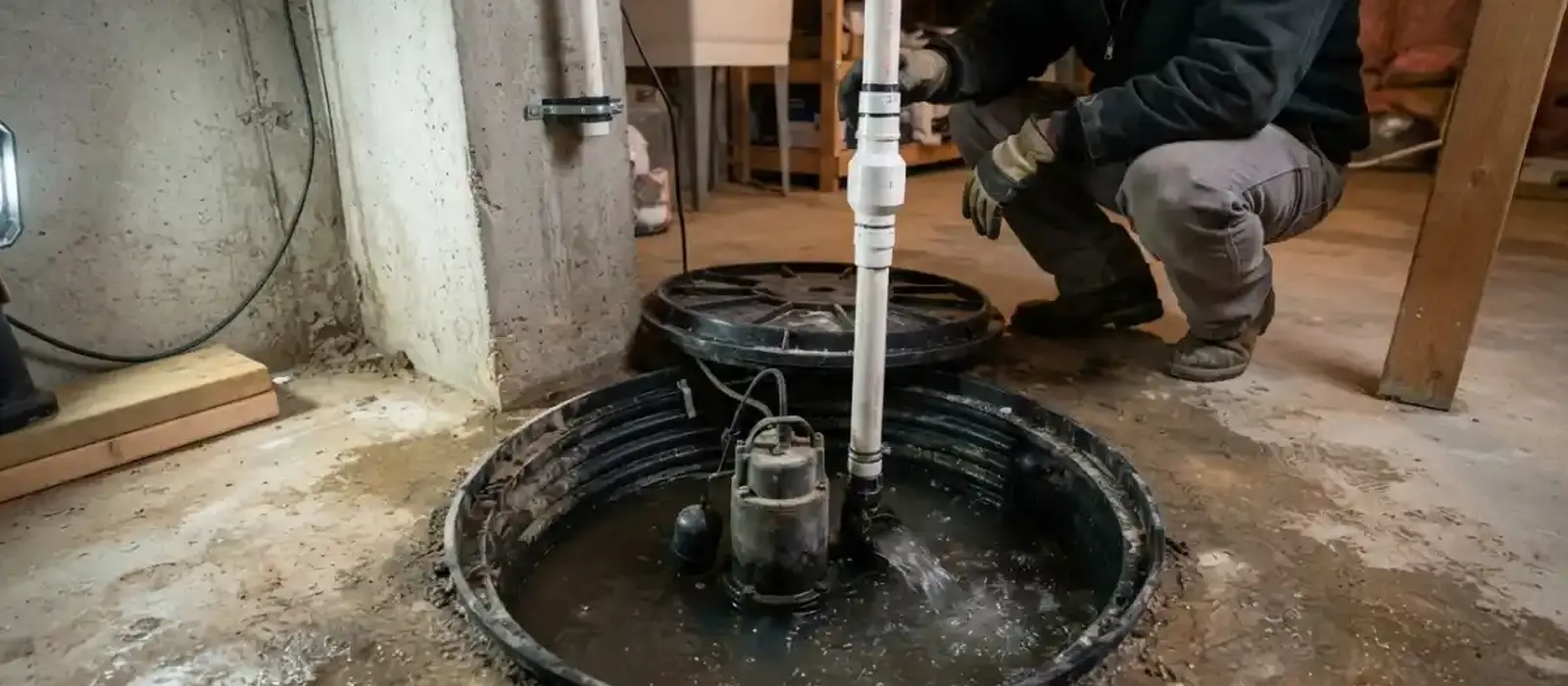
An interior waterproofing membrane is a dimpled plastic sheet fastened to a basement wall. It does not stop water from entering the wall. It catches water that seeps through and guides it down to a drain channel at the base of the wall, from where it flows to a sump pit and out through a pump. The wall stays drier, and the water goes where you send it.
Water control is only part of the job, and the pump and the discharge line are plumbing. That is where we come in. If you are installing a membrane, the pump system must be ready before the wall is finished. See sump pump repair for the pump side.
The parts of a system
A complete interior system has these pieces.
| Part | Job | Who usually does it. |
|---|---|---|
| Wall membrane | Catches seepage and guides it down | Waterproofing contractor. |
| Perimeter drain channel | Carries water to the pit along the floor edge | Waterproofing contractor. |
| Sump basin | Collects water below the floor | Contractor or plumber. |
| Sump pump and check valve | Moves water out | Plumber. |
| Battery backup | Keeps the pit empty in a power outage | Plumber. |
| Discharge line | Carries water to the yard | Plumber. |
Where the water goes: what Hudson says
The Town of Hudson Department of Public Works has a clear position on this. According to its sump pump guidance, a sump pump connected to the sanitary sewer is illegal. Roof drains, downspouts and area drains that connect to the sewer should be redirected to a dry well, a landscaped area or rain barrels.
A connection to the storm drain is allowed only after obtaining permission from the DPW.
That affects any waterproofing plan. The pump must discharge outdoors to an approved place. It cannot go into a floor drain or a laundry sink that connects to the sewer. The DPW is at 1 Municipal Drive, so ask there before you route the discharge.
When a membrane is the right fix
A membrane suits a basement that gets damp along a wall, a floor crack or the joint between the floor and wall, where the water comes from groundwater pressure. It also works where exterior excavation is not practical. It does not fix a roof or gutter problem that is pouring water against the foundation.
It is also not a cure for a pipe leak. A wet wall can come from a leaking supply line or a failed drain, and a membrane will hide that until it becomes serious. We check plumbing first when the source is unclear. See leak detection.
Fix the outside first
Before you pay for any interior system, deal with the water you can control. Clean gutters, extend downspouts several feet from the foundation and grade the soil so it slopes away from the house. Fix leaking hose bibs and failed window wells. These cost far less than an interior system and often reduce the volume of water the system has to handle.
If the basement still takes on water after the exterior work, an interior system is a reasonable next step. It is better to know what it is handling than to build a system for a problem that gutters could solve.
The pump system: size, backup and testing
A pump should be sized to the flow your system will deliver, with a basin large enough that it does not cycle constantly. A check valve in the discharge line prevents water from draining back into the pit. A battery backup keeps the pit empty during a storm outage, which is when water is highest.
Test the pump twice a year by pouring water into the pit. Keep a note of the install date. A pump that has served for many years can fail without warning. The cost of replacing it on your schedule is much lower than the cost of a flood.
Sewage pumps and basement bathrooms
A basement bathroom is a different pump system. A sewage ejector pump moves wastewater up to the sewer line, and it must be vented and sealed. A sump pump handles groundwater and must not connect to the sewer. Do not confuse the two. See plumbing installation for how we plan basement baths.
If you already have a basement bath and a membrane system, the two pumps should have separate pits and separate discharge lines. Mixing them is a code problem and a recipe for a flooded basement.
Signs the water is a plumbing problem
Water that appears at the same spot after the water heater runs, a damp wall near a bathroom above or a wet floor after the washing machine drains points to plumbing, not groundwater. A membrane will not fix these. Water that appears after heavy rain and dries out afterward points to groundwater.
If you are not sure, track when the water appears. A log of dates and weather helps a plumber or a waterproofing contractor find the source. We check the plumbing first so you do not spend money on the wrong system.
Humidity and the finished basement
Even a dry basement can feel damp. A dehumidifier with a drain line sends moisture to a floor drain or a pump. Check that the floor drain it uses is not connected to the storm drain or a prohibited path.
A membrane, a pump and a dehumidifier together make a basement usable. If mold is already present, have it assessed before finishing the walls.
What to expect from a quote
A good waterproofing quote lists the membrane, the drain channel, the pit, the pump, the backup and the discharge route. Ask where the water will go and whether the discharge needs permission from the Town. Ask who is responsible for the plumbing and who is responsible for the wall finish.
We handle the pump, the discharge line and the permit for any plumbing connection, and we coordinate with the waterproofing contractor. Homeowners in Maynard and Marlborough ask the same questions. We answer them before work begins.
Basement waterproofing questions
No. It catches water that seeps through the wall and guides it to a drain and pump.
No. The Hudson DPW says a sump pump connected to the sanitary sewer is illegal. Redirect it to a dry well, landscaped area or other approved place.
Usually yes. The membrane guides water to a pit, and a pump moves it out.
Interior systems cost less and avoid digging, but they manage water instead of keeping it out. Exterior work stops water at the wall and costs more.
No. A pipe leak needs a plumbing repair. We check plumbing before waterproofing when the source is unclear.
The Hudson DPW at 978-562-9333.
Plumbing problem right now?
Call the 24/7 line. Dispatch tells you what to do first and sends a technician.