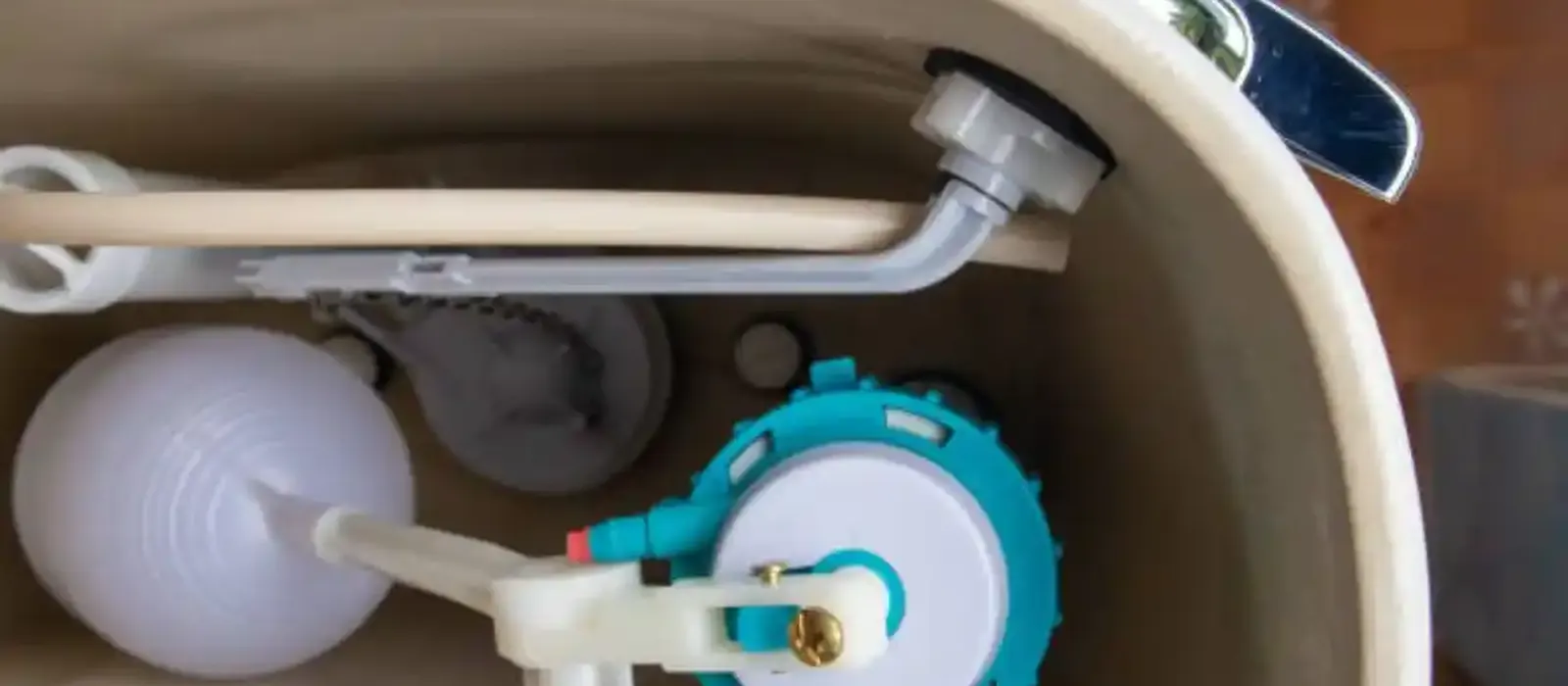
Which valve do you mean?
A toilet has two valves people mean when they search for toilet valve installation. The fill valve sits inside the tank and refills it after a flush. The shutoff valve, also called the supply stop or angle stop, sits on the wall or floor behind the toilet and controls the water feeding the tank. They fail in different ways, and they are replaced in different ways.
A fill valve that runs, hisses or fills slowly is a ten to thirty minute swap with basic tools. A shutoff valve that will not close or leaks at the stem is a plumbing repair that may involve shutting off the whole house. If water is already on the floor, see toilet repair.
How to tell which valve has failed
Match the symptom to the part.
| Symptom | Likely part | Action. |
|---|---|---|
| Water runs into the bowl constantly | Flapper or fill valve | Check flapper first, then replace the fill valve. |
| Tank refills slowly, hissing | Fill valve | Replace the fill valve. |
| Tank overfills and spills into the overflow tube | Fill valve float set too high | Adjust or replace. |
| Wet floor behind the toilet | Shutoff valve or supply line | Replace the valve or hose. |
| Shutoff will not turn | Corroded stop | Replace the stop with a quarter turn valve. |
Replacing a fill valve, step by step
Close the shutoff valve behind the toilet and flush to empty the tank. Sponge out the remaining water. Disconnect the supply line at the bottom of the tank and loosen the plastic nut that holds the old fill valve through the tank floor. Lift it out.
Set the new valve through the hole, adjust its height so the critical level mark is at least an inch above the overflow tube and hand tighten the lock nut. Reconnect the supply line and the small refill tube to the overflow. Open the shutoff slowly, let the tank fill and adjust the float so the water stops about an inch below the top of the overflow tube.
Flush a few times and look for drips at the connection under the tank. A fill valve that is overtightened can crack the porcelain, so use hand pressure and a small additional turn.
Replacing the shutoff valve
This is the part that often needs a plumber. If the old stop is soldered to copper, it must be cut off and the new one fitted. If it is compression, you shut the water to the house, drain the line, loosen the nut and ferrule and slide on a new valve. An old valve that does not close means the whole house must be shut off at the main.
We replace them with quarter turn valves that last longer than multi-turn ones. Many Hudson basements have a main shutoff near the water meter, and it is worth checking now that it turns. See faucet and fixture repair.
What the state code says about permits
The Massachusetts plumbing code, 248 CMR, exempts the repair of leaks in faucets or valves and the clearing of stoppages from the permit requirement. Installing, altering or replacing plumbing generally needs a permit pulled by a licensed plumber through the local inspector. In Hudson that is the Building Department at 78 Main Street.
The practical advice is that swapping a fill valve inside your tank is a repair. Moving a shutoff, changing the supply piping or replacing the toilet itself is more than a repair, and a licensed plumber should handle it. Unpermitted work can complicate a sale or an insurance claim.
Parts that are worth replacing together
While the tank is open, replace the flapper and the flush valve gasket. They cost little and wear at the same rate as the fill valve. Replace the supply hose too, especially if it is older, cracked or bulging, since a failed hose releases water fast.
If you have a toilet with a tank to bowl gasket that is stained or dripping, we replace that as well. It prevents a slow leak that can rot the subfloor.
Choosing the right fill valve
Fill valves come in a few designs. A float cup valve rides up and down the shaft and is quiet and compact. A ball float valve uses a rod and a ball and is common in older toilets. Most hardware stores sell a universal valve that fits a wide range of tanks, and it is a safe pick for a standard two piece toilet.
Check the height of your tank before buying. The valve must sit with its top below the lid, and the critical level mark must be above the overflow tube. A valve that is too tall will bind under the lid, and one that is too short will not shut off properly.
If your toilet is a low profile or a pressure assist model, use a replacement from the toilet manufacturer. Pressure assist units have an inner tank, and a standard fill valve will not work.
Supply lines and shutoff valves: a short buyer's guide
Braided stainless supply lines are more durable than plastic and thin vinyl ones. Buy a length that reaches without a tight bend. A line that is too long can kink, and one that is too short strains the connection.
For the shutoff valve, a quarter turn ball valve is the best choice. It takes a single turn to close and is less likely to seize than a multi-turn one. Match the connection type to your pipe, whether copper, PEX or threaded, and have the right adapter on hand.
If you are not sure what pipe you have, do not guess. A compression valve on the wrong pipe will leak. Call us and we will bring the right fittings. See our toilet repair page for what a visit covers.
When to call us
Call if the shutoff will not close, if the floor is wet and you cannot find the source or if the toilet rocks and the wax ring may have failed. Homeowners in Sudbury and Maynard often call after finding a stain on the ceiling below a bathroom.
A visit includes a check of both valves, the supply hose and the flapper. We tell you what is worth replacing and what can wait.
Toilet valve questions
Many last several years, though hard water and chlorine tablets in the tank shorten life.
Yes. It is one of the easier plumbing repairs if the shutoff works.
A worn flapper or a leaking fill valve is the usual cause. Test the flapper by adding dye to the tank.
A leak repair on a valve is exempt in the state code. Replacing a shutoff or altering piping may need a permit, so ask the Hudson inspector.
Do not force it. Shut the main water valve and call a plumber to replace the stop.
Most manufacturers advise against it, since tablets can damage the flapper and the fill valve.
Plumbing problem right now?
Call the 24/7 line. Dispatch tells you what to do first and sends a technician.