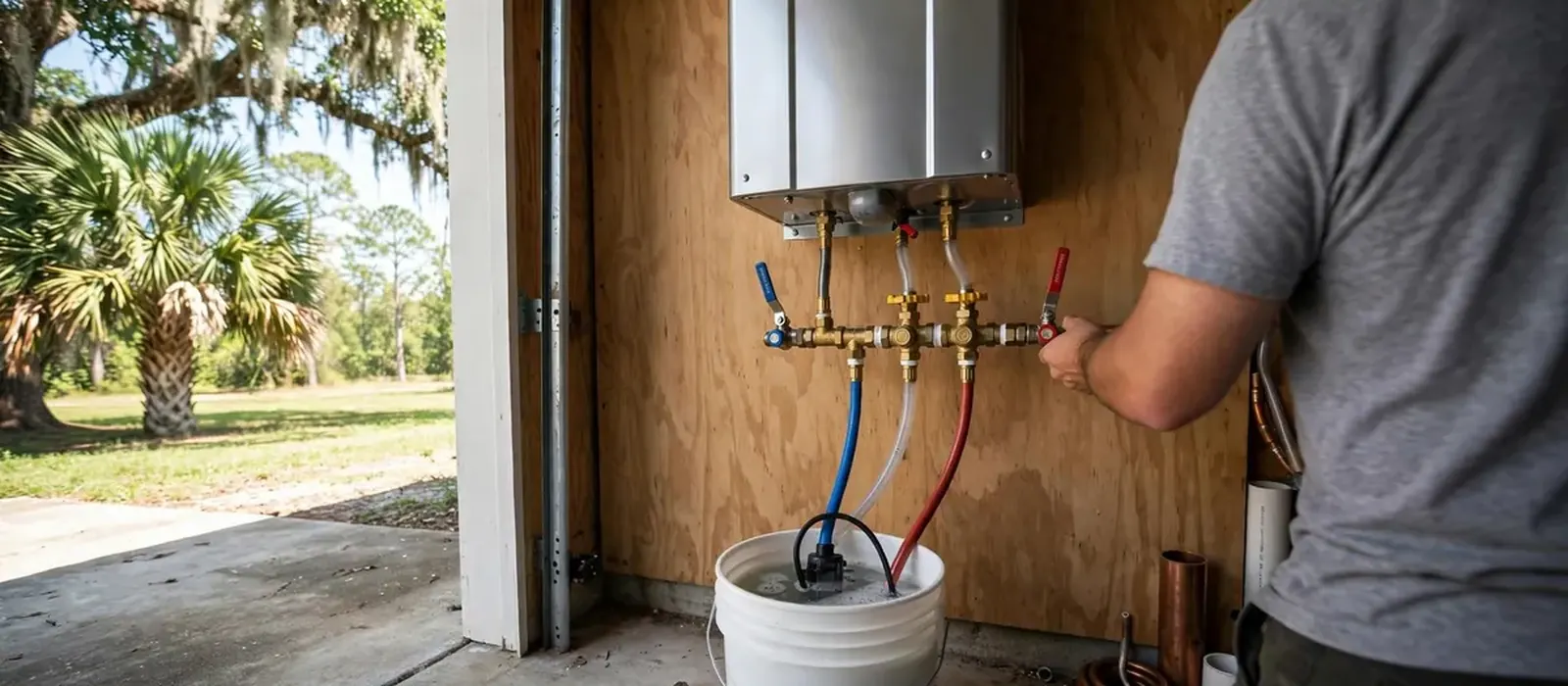
What a venting kit does
A tankless gas water heater burns fuel at a high rate and has to send combustion gases outside. A venting kit is the set of pipes, elbows, terminations and fittings that does that safely. Using the wrong kit is one of the main reasons a new install fails inspection or sets off a carbon monoxide alarm.
The kit your unit needs is listed in its installation manual. You do not choose it from a store shelf by price. The manufacturer lists approved materials, maximum lengths and the number of elbows the unit can handle. See tankless water heater service for the repair side of these units.
The main types of venting
Which type you need depends on the unit and the location.
| Type | How it works | Typical use. |
|---|---|---|
| Direct vent, two pipe | Brings combustion air in and sends exhaust out through separate pipes | Sealed combustion units, tight homes. |
| Direct vent, concentric | A pipe inside a pipe does both jobs through one wall hole | Short runs through a side wall. |
| Power vent, single pipe | Uses room air and a fan to push exhaust out | Where there is enough combustion air. |
| Existing chimney liner | Lines a masonry chimney with approved pipe | Houses with a usable chimney. |
Materials: PVC, CPVC, polypropylene and stainless
Condensing tankless units produce cool exhaust, so they can use plastic venting. The manual says which types are approved. Non-condensing units run hotter and need stainless steel or another listed metal vent. Mixing materials or using the wrong cement can create a leak path that is hard to see.
Ask the manufacturer for the approved list before you buy a kit. Never combine vent parts from different brands unless the manual allows it.
Clearances and termination points
The vent must end at a safe distance from windows, doors, air intakes, meters and corners. In snowy Massachusetts, it must also stay above the expected snow line so drifts do not block it. A blocked vent will shut the unit down or push exhaust back into the house.
We measure these distances before we cut a hole. A termination that works in summer can be buried in February. Mark the vent location with a stake in the fall so you remember to clear it.
Condensate and drains
A condensing unit produces acidic water that must drain somewhere. The condensate line goes to a floor drain, a laundry sink or a neutralizer first. It must slope down and be protected from freezing. A frozen condensate line is a common reason a unit locks out on a cold morning.
The neutralizer cartridge needs a refill on a schedule. Put that in the maintenance calendar with the annual flush.
Gas work needs a permit
According to the state plumbing and gas code, 248 CMR, plumbing and gas work may not be installed, altered, replaced or repaired until the inspector issues a permit. The inspector must act within two working days after the licensed plumber says the work is ready, and work generally cannot be covered until it has been tested and certified. The permit is pulled by the licensed plumber or gas fitter, not by the homeowner.
In Hudson, start with the Building Department at 78 Main Street. The reason it matters for venting is simple. The inspector looks at the vent, the gas connection and the combustion air. Those are the parts that protect your family from carbon monoxide.
Install a carbon monoxide alarm
Place a carbon monoxide alarm near bedrooms and test it monthly. Replace batteries on schedule. A new tankless unit does not replace the need for the alarm.
If the alarm sounds, get everyone outside and call 911. Do not return until the fire department says it is safe. Then call us to check the vent. Leave a gas smell to the fire department and the gas utility, and call us for the plumbing side afterward.
Common mistakes we see on tankless vents
The most common mistake is a vent that has too many elbows or too long a run, so the unit cannot clear exhaust fast enough. Each elbow counts as extra length in the manufacturer's table, and a few of them can push the vent over the limit.
Another is a vent that slopes the wrong way. Exhaust pipes for condensing units must slope back to the unit so condensate drains. A vent that slopes away collects acidic water in a low spot and eventually leaks.
A third is a termination that is too close to a window or a neighbor's property. Even when the clearance meets code, steam and exhaust can stain siding and bother people. We look at where the plume will go.
Retrofitting an older house
Older homes often have a masonry chimney that was built for a larger flue. A tankless unit needs a smaller liner, and the chimney must be lined to avoid condensation damage. Sometimes it is easier to cut a new hole through a side wall.
Look at where the unit will go. A wall near the existing gas line and a vent path to the outside is ideal. A basement with a finished ceiling can make the vent run costly. We walk the house and show you the options before pricing.
If you have an oil boiler and use its tankless coil for hot water, a separate heater is a different conversation. Ask about it when you call. Our installation page describes what a planned job looks like.
Reading the manual like an installer
The venting chapter of the manual is the document the inspector will use. It lists approved materials by model, the maximum equivalent length, the required slope and the minimum clearances. Print it or save it with your project papers.
If a plumber tells you the manual does not matter, that is a red flag. The listing of the unit is tied to the vent system the manufacturer tested, and using something else can void the warranty and fail inspection.
Why the kit is part of the quote
A long vent run, several elbows or a wall cut through a finished room can add real cost. That is why we look at the vent path before we price a unit. Customers in Marlborough and Berlin receive a written scope that lists the vent kit and the termination point.
If you are buying a unit online, send us the model first. We will tell you which kit it needs.
Tankless venting questions
Usually not. Tankless units run hotter or need different sizing, so an old flue often must be replaced or lined.
Only if the manufacturer lists it for your unit. Condensing units often allow it and non-condensing units do not.
The manual gives a maximum length and a number of elbows. We measure the path before you buy.
Yes. Gas work needs a permit pulled by a licensed professional through the local inspector.
A frozen condensate line or a blocked vent terminal is the usual cause.
Away from windows, doors and air intakes, and above the snow line.
Plumbing problem right now?
Call the 24/7 line. Dispatch tells you what to do first and sends a technician.