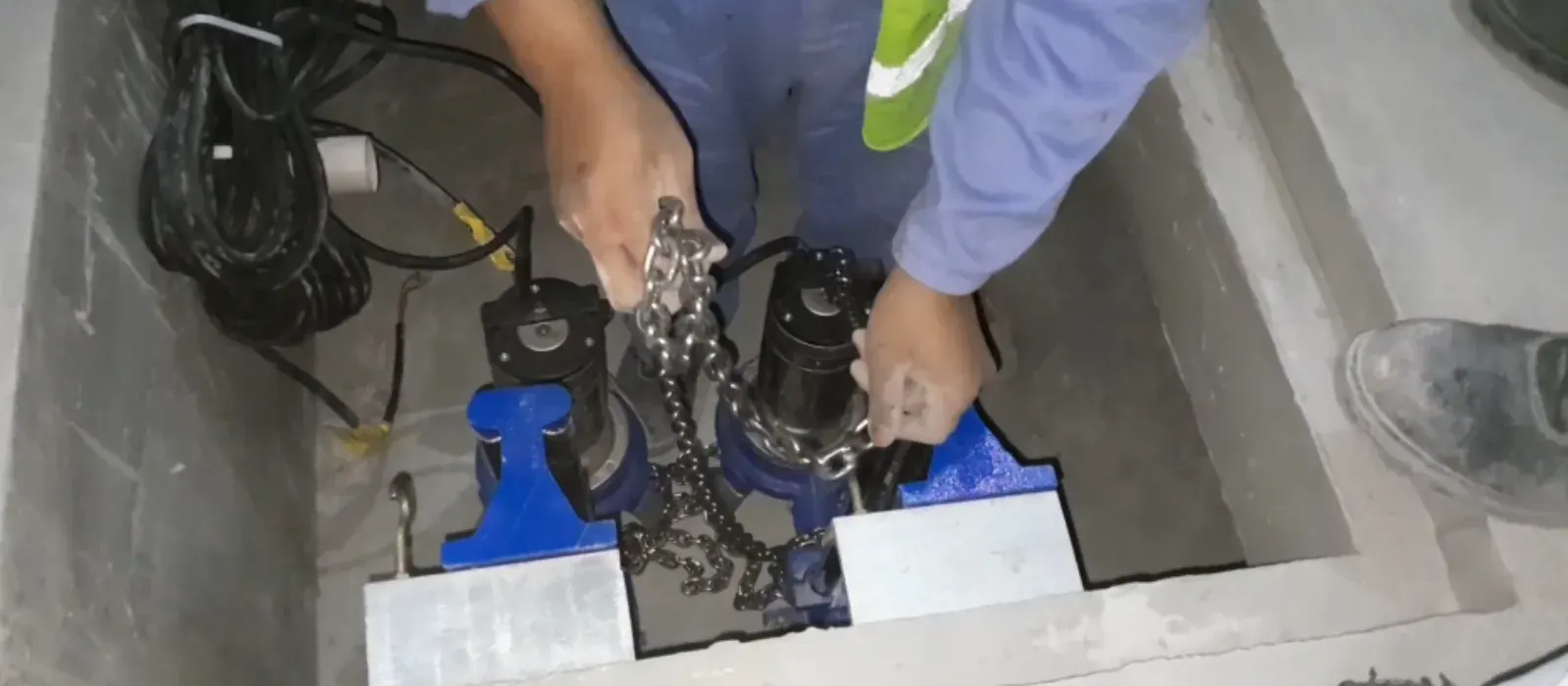
Sewage pump versus sump pump
People often use the words interchangeably, and they are different systems. A sump pump removes groundwater from a pit near the foundation and discharges it outdoors. A sewage ejector pump, sometimes called a sewage sump pump, lifts wastewater from fixtures that are below the level of the sewer line, such as a basement toilet, shower or laundry sink, up to the main drain.
The two must never share a pit or a discharge pipe. Putting groundwater into a sewer pump or sewage into a yard discharge is a code violation and a health problem. If you need groundwater control, see sump pump service. For waste from below grade fixtures, this is the page.
When you need an ejector pump
The need comes from elevation, not preference.
| Situation | Gravity drain possible? | What to do. |
|---|---|---|
| Basement bathroom below the sewer line | No | Install a sewage ejector system. |
| Basement laundry sink, floor above the sewer | Yes | Gravity drain is fine. |
| Basement kitchenette below the sewer line | No | Use a grinder or ejector system. |
| Existing ejector that no longer keeps up | Not applicable | Service or upgrade the pump. |
How the system works
The fixtures drain by gravity into a sealed basin set into the basement floor. When the level rises, a float switch turns on the pump. The pump moves the waste up through a discharge pipe, past a check valve that prevents backflow and into the main sewer line. The basin has a gasketed lid and a vent so that gas does not escape into the house.
A grinder pump is a variation that cuts solids into a slurry and can push waste through a smaller pipe. Which type suits your house depends on the distance, the height and the manufacturer's guidance. We pick the pump to match the load.
What the installation involves
The basin goes into a hole cut in the slab. We set it level, connect the inlet drain and the vent, run the discharge pipe to the main with a check valve and a union, wire the pump to a dedicated outlet and test it with water. A basement floor is concrete, so the work involves cutting and then patching the floor.
The vent is a code item and a common mistake. The basin must be vented to the outdoors, through the roof or by connecting to the house vent system. Skipping the vent can cause odors and sluggish operation.
Permits and who may do the work
In Massachusetts, plumbing work that is installed, altered or replaced needs a permit from the inspector under 248 CMR, and the permit is pulled by a licensed plumber, not by a homeowner. The inspector may require a rough inspection and a final inspection, and work generally cannot be covered until it is tested and certified. In Hudson, the Building Department at 78 Main Street handles it.
There is another local point. The Town's DPW says a sump pump connected to the sanitary sewer is illegal. A sewage ejector pump is a different system and does connect to the sewer by design, since it handles waste. The reason to say it plainly is that a pit that mixes both is a violation. Keep them separate.
Maintenance and warning signs
Check the lid for a tight seal, and listen for the pump cycling. If it runs constantly, a float may be stuck or a check valve may have failed. If you smell sewage, the lid or the vent may be leaking. A high water alarm tells you the pump is not keeping up.
Have the pump inspected every year or two, and replace it on a planned schedule. Do not flush wipes, paper towels or feminine products, since they can jam the pump. Ask us about a high water alarm if you do not have one.
A backup for power outages
An ejector pump stops when the power fails. If you lose power during a storm and use the basement bathroom, the basin can fill and back up. A battery backup keeps the pump running, or you can simply avoid using the fixtures until power returns.
If sewage does back up, treat it as a contaminated spill. See sewer line repair for what happens when a backup comes from the main line, and call dispatch if you need help right away.
Choosing the pump: solids handling and horsepower
A sewage ejector pump must pass solids of a certain size, usually two inches. A standard sump pump cannot, and it will clog. The horsepower and head rating must match the height the waste has to rise and the length of the discharge run.
A pump that is too small will run constantly and fail early. One that is too large can short cycle. We size it based on your installation, not a standard package.
Noise, odor and what is normal
A properly installed system is quiet except for the short run of the pump after a flush. A strong odor around the basin means the lid is not sealed or the vent is blocked. A pump that runs but does not empty the basin may have a failed check valve or a clogged impeller.
If you notice a change, call before it becomes an overflow. A basin that overflows with sewage is a cleanup that costs far more than a service visit.
Cost factors for an ejector system
The price depends on the pump type, the basin size, how much concrete must be cut, the length of the discharge pipe, the vent route and the electrical work. A bathroom rough-in adds to the total. We give a written scope with each item listed so you can compare quotes. Want your real number? Call (508) 389-4045.
Planning a basement bathroom
Before you buy fixtures, have a plumber measure the depth of your sewer line and the height of the slab. That sets whether you need a pump and what kind. A upflush toilet is an alternative for small spaces, but a full ejector system handles a bathroom more reliably.
We plan these jobs with homeowners in Sudbury and Maynard, and we pull the permits. A written scope lists the basin, the pump, the vent and the discharge route.
Sewage pump installation questions
If the fixtures sit below the sewer line, yes. If they are above it, gravity may work.
No. They must be separate systems with separate discharge lines.
Yes. The basin must be vented to the outdoors or to the house vent system.
Yes. A licensed plumber pulls the permit through the Building Department and the work is inspected.
Many last several years with care. Wipes and heavy use shorten life.
The pump stops. A battery backup can keep it running, or avoid using the fixtures until power returns.
Plumbing problem right now?
Call the 24/7 line. Dispatch tells you what to do first and sends a technician.