Why a cleaner product often fails on a main line
A main sewer line is a four inch or larger pipe that carries all the wastewater from the house to the street. A bottle of liquid cleaner cannot do much in that setting. The product mixes with water in a pipe that may already be full, and the active ingredient is diluted or washed past the blockage. By the time it reaches the clog, it has little left to work with.
The clog itself is usually roots, a mass of grease and wipes, or a broken section. Chemicals do not dissolve roots or repair a crack. If the main is blocked now, go to sewer line cleaning. If you want to understand your options, read on.
How to tell it is the main line
Look at the whole house, not one fixture.
| Sign | What it suggests. |
|---|---|
| Several fixtures slow or backed up at once | Main line or branch blockage. |
| Basement floor drain bubbles when you flush | Main line is full below the drain. |
| Toilet gurgles when the washer drains | Air trapped by a blockage downstream. |
| Sewage smell near the foundation or yard | Cracked or broken lateral. |
| Wet or very green patch in the lawn | A leaking sewer lateral. |
The cleaners that are on the shelf
Caustic cleaners contain lye and generate heat. They can soften plastic pipe joints and damage older pipes if they sit. Acid based cleaners are stronger still and can burn skin and eyes. Enzyme and bacterial products are gentler and can help with grease buildup over time, but they are maintenance products, not emergency tools.
The risk is also to the person who comes next. If a plumber opens a trap or a cleanout and finds standing chemical, it can splash. Tell the technician if you used a product. We do not recommend them for a main line.
What actually clears a main line
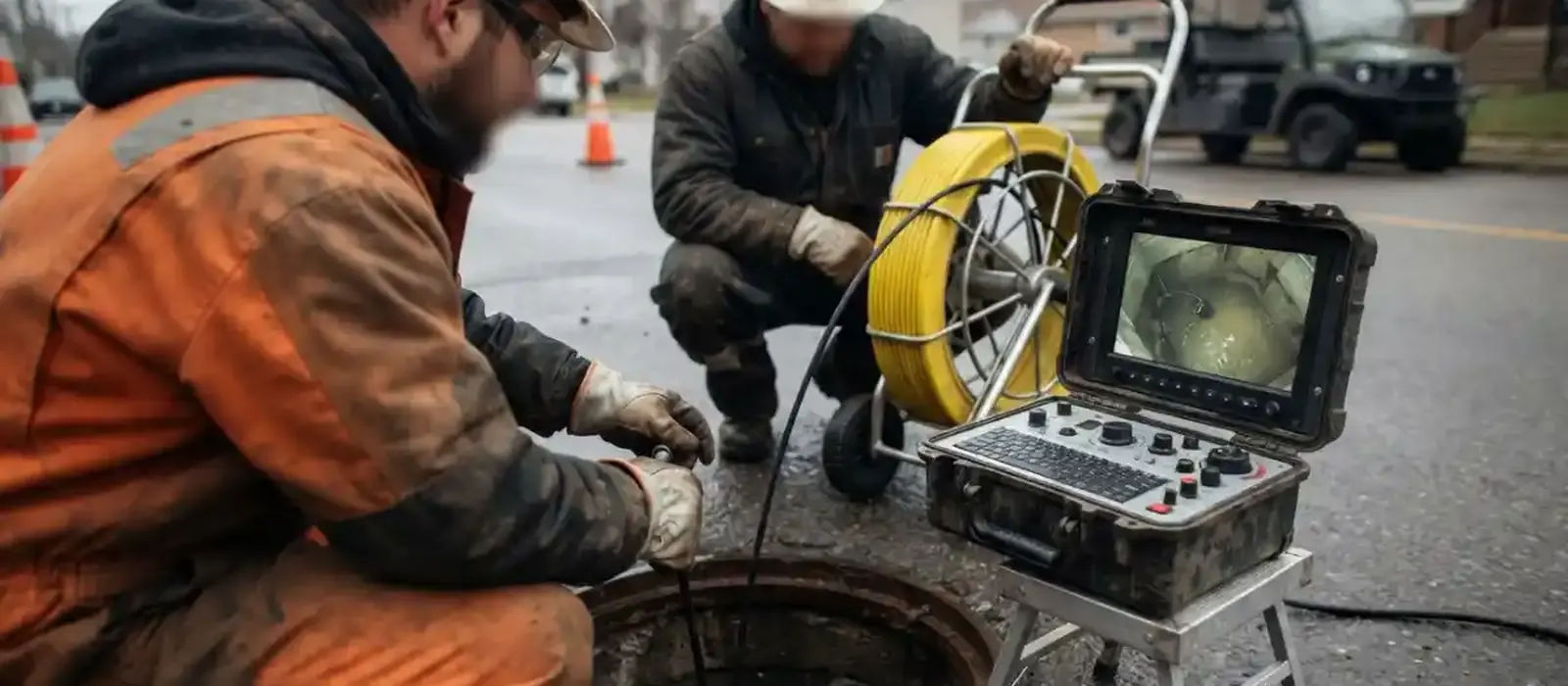
A cable machine with a cutting head clears roots and soft blockages. A jetter clears grease and scale and cleans the pipe wall. A camera shows what is there and whether the pipe is broken. These are professional tools because the line is long, the pipe is large and the job needs power and control.
Most main line calls are cleared the same day. After the line is open we run a camera to see why it clogged. If the pipe is sound, you may only need to change a habit. If it is damaged, we explain options on the sewer line repair page.
Who to call: your line or the Town main
Hudson's Department of Public Works maintains the public sewer collection system, and according to its published rules only sewage may be discharged into it. If the blockage is in the street main, the DPW responds. Its address is 1 Municipal Drive and its phone number is 978-562-9333. If the blockage is in the lateral from your house to the connection, it is yours.
The practical step before you call anyone is to look at the cleanout. If the cap is outside and the pipe is full, the blockage is likely downstream of the cleanout, which could be your lateral or the main. A camera pass answers the question. We show you the footage so you can talk to the DPW with facts.
What to do while you wait for help
Stop using water. Do not flush, run the dishwasher or start laundry. Every gallon you add will look for the lowest drain, which is often a basement floor drain or a tub. If water is already coming up, keep children and pets away and put towels down.
If there is standing sewage, treat it as contaminated. Wear gloves and boots if you must enter, and wash well afterward. Keep electrical equipment away from the water. Call your insurer and take photos before cleanup.
Keeping the main clear after the visit
Do not pour grease into any drain. Do not flush wipes, even those labeled flushable, and avoid paper towels and feminine products. Cut back shrubs that grow near the lateral. If you have an older clay or cast iron lateral, schedule a camera look every few years.
A line that has been jetted once usually stays clearer than one that is only cleared during emergencies. See hydro jetting if the problem is repeat grease or scale. Customers in Stow and Berlin on septic systems should also have the tank checked, since a full tank looks like a main line clog.
Roots: the clog a bottle cannot remove
Tree roots enter clay and cast iron lines at the joints, where they find water and nutrients. They grow into a mass that catches paper and grease. A chemical will not cut them. A root cutter on a cable can clear the pipe, but the root will grow back unless the joint is repaired.
If your lateral has roots, the long term answer is a spot repair or a liner. Cutting them is a stopgap that buys a year or two. We show you the footage and explain which makes sense.
Septic systems and main line symptoms
Homes in the outer parts of the area, including in Stow, Berlin and Sudbury, may be on septic systems. A full tank or a blocked outlet looks like a main line clog. The house drains slowly, gurgles and may back up.
We clear the house line, and we tell you if the tank is the problem. A septic hauler pumps the tank, and the Board of Health sets the rules for your town. A cleaner will not fix a full tank.
Backwater valves and prevention hardware
A backwater valve is a fitting installed in the sewer line that closes if wastewater flows backward from the street. It protects a basement from a municipal backup. It must be accessible and maintained, and it needs a permit. Ask us whether your house is a candidate. It is not a substitute for clearing a blockage in your own lateral.
When the cleaner is the wrong question
If you are asking about a cleaner because the main keeps backing up, the real question is why it keeps backing up. A clog that returns every few months points to roots, a belly or a broken pipe, not bad luck. A repair or lining costs more at first and less over several years.
We start with a camera because it makes the rest of the decision easier. The footage is yours to keep.
Main sewer line clog questions
Rarely. The pipe is large and the blockage is usually roots or grease that a chemical cannot dissolve.
Caustic and acid products can damage some pipes and injure whoever works on the line next. We do not recommend them for a main.
Roots, grease, wipes and broken or sagging pipe are the usual causes.
Look near the foundation, in the basement near the main stack or in the yard for a capped pipe.
The DPW at 978-562-9333. We can show you where the problem is with camera footage.
Yes. It protects the technician from a chemical splash.
Plumbing problem right now?
Call the 24/7 line. Dispatch tells you what to do first and sends a technician.