The short answer
To install a garbage disposal, you remove the old unit or the sink strainer and mount a new flange under the sink. Then you hang the disposal and connect its outlet to the trap. Last, you wire or plug it in and test for leaks. Most swaps take one to two hours. A first-time install where no disposal existed takes longer because it may need a new switch and an outlet.
The work is simple in concept and unforgiving in the details. A sink flange that is not seated in plumber's putty will weep for months. An outlet that is not on the right circuit can trip a breaker. If you want to compare it with having a plumber do it, see our garbage disposal page.
What you need before you start
Gather these first so you are not hunting for parts with the sink torn apart.
- A disposal matched to your household. A one-third horsepower unit suits light use and a three-quarter or one horsepower unit grinds faster and jams less.
- A disposal mounting kit if your model does not include one, plus plumber's putty and a new rubber drain gasket.
- A power cord kit, or a place to hardwire, plus wire nuts and a cable clamp.
- A hex key, a screwdriver, channel lock pliers and a bucket for the old trap.
- A dishwasher drain hose clamp if the dishwasher connects to the disposal.
Step by step
First, turn off the breaker for the circuit and unplug the old unit. Place a bucket under the trap and loosen the slip nuts. Support the old disposal while you twist the mounting ring free, since it is heavy and awkward. Lower it and set it aside.
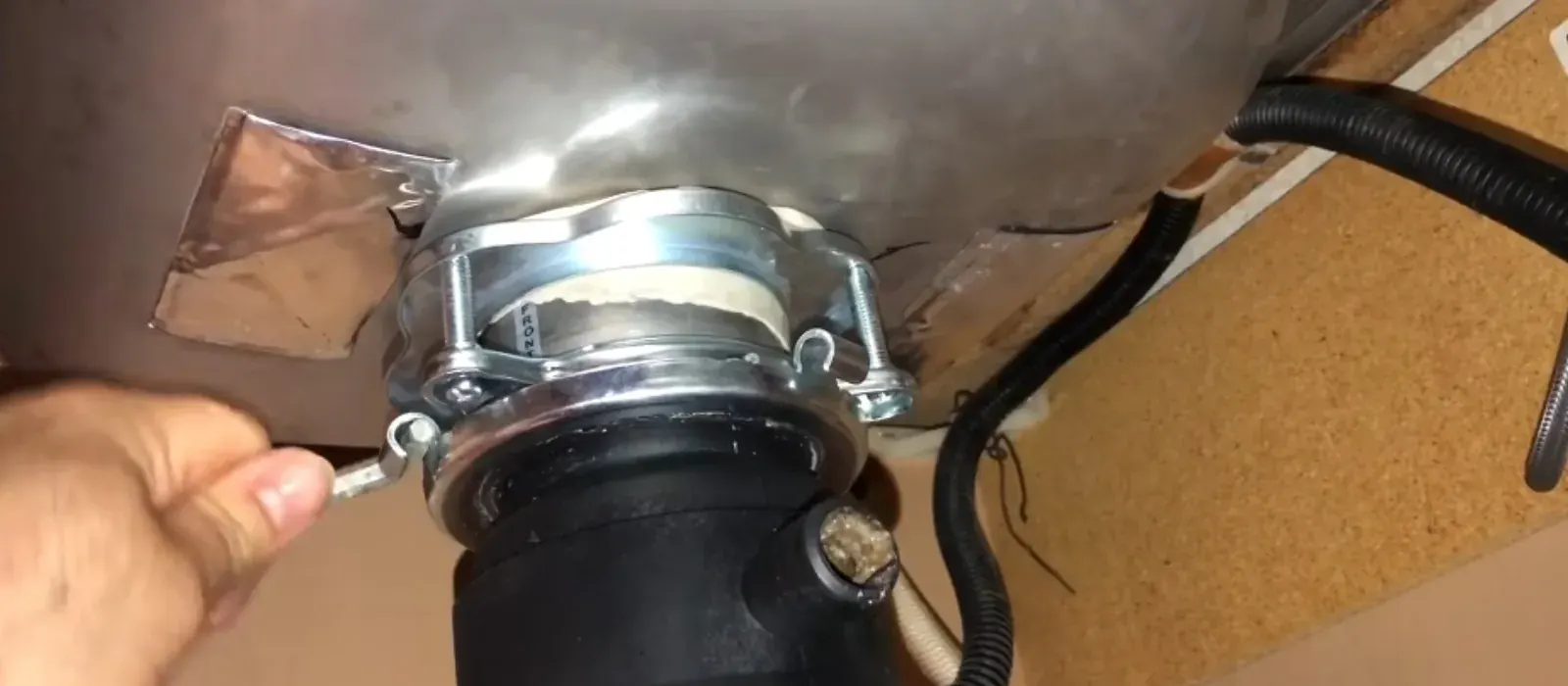
Next, remove the old flange from the sink. Clean the sink opening of old putty. Press a rope of fresh plumber's putty under the new flange, set it in the drain hole and tighten the mounting assembly from below until putty squeezes out evenly. Trim the excess from above.
Then connect the wiring. If the unit has a cord, plug it into a switched outlet. If it is hardwired, run the wires into the electrical plate, match black to black and white to white and ground to the green screw. Close the plate before you hang the unit.
Finally, lift the disposal onto the mounting ring, twist it until it locks and tighten the lock tabs. Remove the dishwasher knockout plug with a hammer and screwdriver if the dishwasher drains into the unit, and then attach the hose. Reconnect the trap, run water and check every joint with a dry paper towel.
Common problems with a DIY install
These mistakes cause most return visits.
| Mistake | What happens | Fix. |
|---|---|---|
| Thin putty or loose flange | Slow leak under the sink | Remove, re-putty and re-tighten. |
| Forgot the dishwasher knockout | Dishwasher drains slowly or backs up into the sink | Open the knockout and clear the plug. |
| Wrong trap alignment | Joints leak or the drain gurgles | Reset the trap with proper slope. |
| Cord into a plain outlet | The disposal runs when you plug it in, or never | Wire it to a switch. |
| Undersized unit | Frequent jams and tripped reset | Move up one size. |
Septic systems and disposals
Many Massachusetts homes use a septic system, including some on the edges of Hudson and in neighboring Stow and Berlin. A disposal adds solids, so many septic professionals advise against one. Ask your septic contractor or your town Board of Health before you add one. If you do use one, pump the tank on schedule and keep fats and oils out of the drain.
In a home on town sewer, a disposal is simply a convenience. Even then, scrape plates first and run cold water while it works.
What the Town of Hudson says about grease and grinders
Hudson's grease interceptor regulation sets the rule for food businesses, and it is a clear window into what the Town worries about. According to the regulation, waste from a garbage grinder at a food service facility must pass through a solids interceptor and then a grease interceptor before it reaches the drain. Grease interceptors must be inspected monthly and cleaned before they exceed one quarter of their capacity.
The tie-back for a homeowner is that grease and food solids are what clog sewer lines. Pouring grease down a kitchen sink, with or without a disposal, is how a line that is fine today becomes a clog next winter. If you have a backup after installing a disposal, see drain cleaning.
Wiring and the outlet under the sink
Most disposals plug into an outlet under the sink that is controlled by a wall switch. If your kitchen has an unswitched outlet there, the unit will run whenever it is plugged in, so plan for a switch. Running new wire is electrical work and has its own permit rules. If you are not comfortable with it, hire an electrician for that part.
A disposal also needs a circuit that is not overloaded. Sharing a circuit with a dishwasher and a microwave can trip the breaker when the motor starts. If the breaker trips when the disposal runs, the circuit is the issue, not the unit.
Always switch off the breaker and test the wires with a tester before you touch them. A hardwired connection is a simple three wire job, but a mistake can shock you or burn out the motor.
Testing, break-in and first-week care
After the install, run cold water for a full minute with the disposal off and look for drips at every joint. Wipe each fitting with a dry paper towel, since a slow weep is easy to miss. Then run the unit for a few seconds with water flowing and check again.
Grind a few ice cubes to knock off the packing residue, and flush with cold water. Check again after a day and after a week, because joints can settle. A weep under the sink that appears days later is usually the mounting ring or the flange putty.
For the first week, avoid fibrous foods like celery and corn husks, and keep grease out. If the unit hums and will not spin, turn it off, and use the hex socket at the bottom to free the jam. The steps are on our disposal repair page.
When to call a plumber instead
Call a plumber if the sink drain is corroded, the trap does not line up with the new outlet, there is no switch or outlet under the sink or the cabinet floor is already soft from an old leak. Those conditions turn a two-hour swap into a repair.
We can also check that the line behind the sink is clear before the new unit goes on, which saves a second visit. Homeowners in Marlborough and Stow can reach us through the same 24/7 line.
Garbage disposal installation questions
Yes, if you are comfortable with basic plumbing and wiring. A swap is easier than a first install, since the switch and outlet already exist.
A swap usually takes one to two hours. A first-time install with new wiring takes longer.
The state plumbing code exempts repairing leaks in faucets or valves and clearing stoppages. A new installation or alteration of fixtures and drains may need a permit, so check with the Hudson inspector first.
Choose by how much you cook and how many people use the sink. A larger horsepower motor jams less.
The knockout plug in the disposal inlet was probably not removed. Clear it and check the hose.
Many septic professionals recommend against it. Ask your contractor or the Board of Health before you decide.
Plumbing problem right now?
Call the 24/7 line. Dispatch tells you what to do first and sends a technician.