Why cast iron fails
Cast iron was the standard material for house drains and stacks for much of the twentieth century, and many older Hudson homes still have it. The pipe is strong, but it does not last forever. Inside, the iron slowly oxidizes and forms a rough scale that narrows the pipe and catches debris. On the outside, moisture can corrode it.
The bottom of a horizontal run is where the damage tends to start, because that is where wastewater sits. Over many years the bottom can thin, crack or collapse, and a section of pipe can leak without any visible sign above.
Signs your cast iron drain is failing
Look for these symptoms.
- Slow drains in several fixtures, especially on the lowest floor.
- A sewer smell in the basement or near a stack.
- Rust stains or damp spots on the outside of exposed pipes.
- Repeated clogs that return after snaking.
- Gurgling or bubbling when you run water elsewhere.
- Cracks or a hollow sound when you tap the pipe.
How we diagnose it
We run a camera through the line to see the pipe wall. Scale, cracks, holes and offsets show clearly. We then mark the location of each defect on the surface. For exposed pipe in a basement or crawlspace, we also tap and inspect the pipe by hand.
The camera is essential. Cast iron can look fine from outside and be nearly closed inside. It can also look rusty outside and be sound inside. See sewer camera inspection for what the report shows.
Repair options compared
Which option fits depends on how much of the pipe is bad.
| Option | Best when | Trade-off. |
|---|---|---|
| Clean and descale | Scale only, pipe walls sound | Temporary if the wall is thin. |
| Repair coupling on a short section | One cracked or leaking length | Does not fix other weak spots. |
| Cut out and replace with PVC | Several bad sections or a failed run | Needs wall or floor opening. |
| Cured in place lining | Cracks and scale across a long run, pipe still round | Not for collapsed pipe. |
| Full replacement | Pipe is failing everywhere | Highest cost, longest result. |
Replacement with plastic pipe
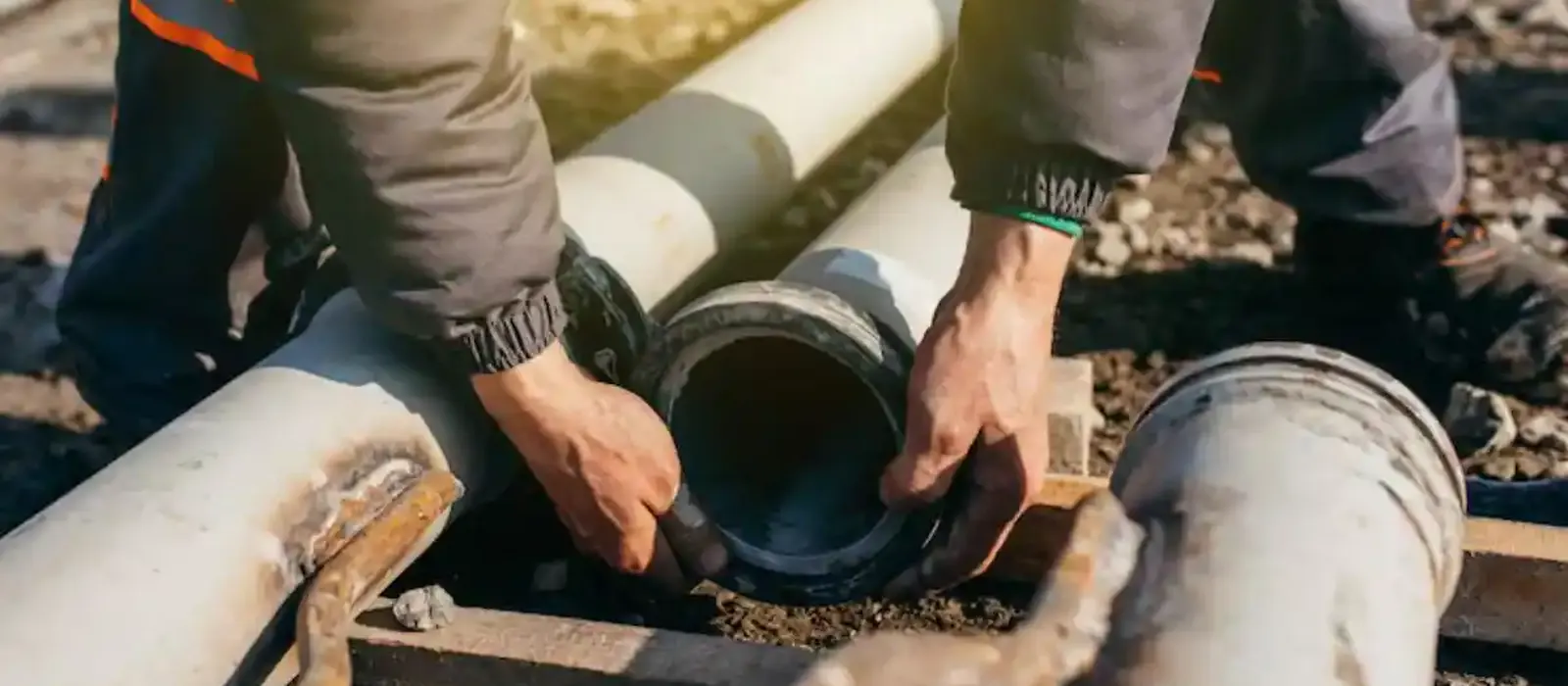
The most common fix is to cut out the failed length and replace it with PVC or ABS, using no-hub couplings where the plastic meets the iron. Plastic does not rust or scale, and it is lighter and easier to work with. The work usually involves opening a section of ceiling, wall or floor, and we patch the opening when we finish.
If the cast iron stack runs inside a wall, we plan the access carefully. A stack is part of the vent system too, so it must stay connected to the roof vent. Any change must be inspected before the wall is closed. See repiping for whole house work.
Permits and inspections for drain pipe work
The Massachusetts plumbing and gas code is 248 CMR. It says plumbing work that is installed, altered, removed, replaced or repaired needs a permit from the inspector. Exempt tasks include repairing leaks in faucets or valves and clearing stoppages. The code also says the work generally cannot be covered until it is tested and certified.
In Hudson, the Building Department at 78 Main Street handles permits. A licensed plumber pulls them. For a cast iron replacement, that means the new pipe is inspected before the wall is closed. It is the step that protects you when you sell the house. Calling 811 before any digging outside is also required.
Cast iron under the slab and outside the house
Some houses have cast iron under a basement slab or in the yard. Repair there means breaking concrete or digging. Lining can avoid that if the pipe is still round. We discuss both and give you a price for each.
Outside the house, a lateral to the street that is old cast iron, clay or fiber pipe may fail at the connection to the main. If the failure is on the Town side, the DPW handles it. If it is on your side, we repair it. The camera shows which side the problem is on.
What the repair costs depend on
The price depends on how much pipe is bad, how deep and how reachable it is, whether the pipe is inside a wall or under a slab, and how much finish work is needed afterward. A short exposed run in a basement ceiling is far cheaper than a stack in a finished wall.
We give a written scope with options. You can see the cost of a spot repair, a longer replacement and lining where it applies, so you can choose with the numbers in front of you.
Roots, bellies and other drain issues that look like cast iron failure
Not every slow drain in an old house is a failing cast iron pipe. Roots in a clay section outside, a belly in the lateral or a grease blockage can produce the same symptoms. The camera separates them.
If the cast iron is sound and the problem is a belly or roots further out, replacing the iron would not help. That is why we look first. It protects you from paying for the wrong repair.
Selling or buying a house with cast iron
Buyers can ask for a camera look at the drain before closing, and sellers can have one done to show the pipe is sound. A report with a recording is more useful in negotiation than a general statement that the pipes are old. If the pipe is failing, the cost can be priced into the deal.
We provide the recording and a written summary for either side. See sewer inspection for what the report covers.
What a repair visit looks like
We start with a camera and a written scope. If the repair is small, we may do it the same day. If it needs opening walls, we schedule it and tell you how long water and drains will be out. We protect floors and keep dust down as much as possible.
Homeowners in Maynard and Marlborough, where many older houses still have cast iron, call us for the same service. If sewage is backing up now, dispatch is open 24/7.
Cast iron sewer pipe questions
Many last several decades, but lifespan depends on water, soil and use. A camera shows the actual condition.
Yes, if only a section is bad. A repair coupling or a cut-out replaces that length.
Often yes, if the pipe is still round. It is not suitable for collapsed sections.
Yes, for replacement work. A licensed plumber pulls it through the Building Department and the inspector checks the work before walls are closed.
A cracked cast iron pipe, a dry trap or a failed seal can cause it. A camera and a smoke or water test find the source.
Wear and age are usually excluded. Damage from a sudden failure may be covered. Check your policy.
Plumbing problem right now?
Call the 24/7 line. Dispatch tells you what to do first and sends a technician.